Special Feature: A Reflection on the Bootcamp Experience
By: Aadarshini AnandAugust 26, 20264 Min ReadShare:
Was it Worth Waking Up?
“6:00 a.m.!” I screamed. “No way! I could never wake up that early!”
On Sunday, July 12, the day before the Curious Science Writers bootcamp, I realized that the meeting began at 6:00 a.m. Pacific Time. For most of summer break, I had been sleeping from 6:00 a.m. to 2:00 p.m. So, from my perspective, this bootcamp took place exactly during my bedtime. I was not one bit willing to wake up that early every morning to attend a “summer school.” However, I had already registered without checking the schedule, so all I could do was attend.
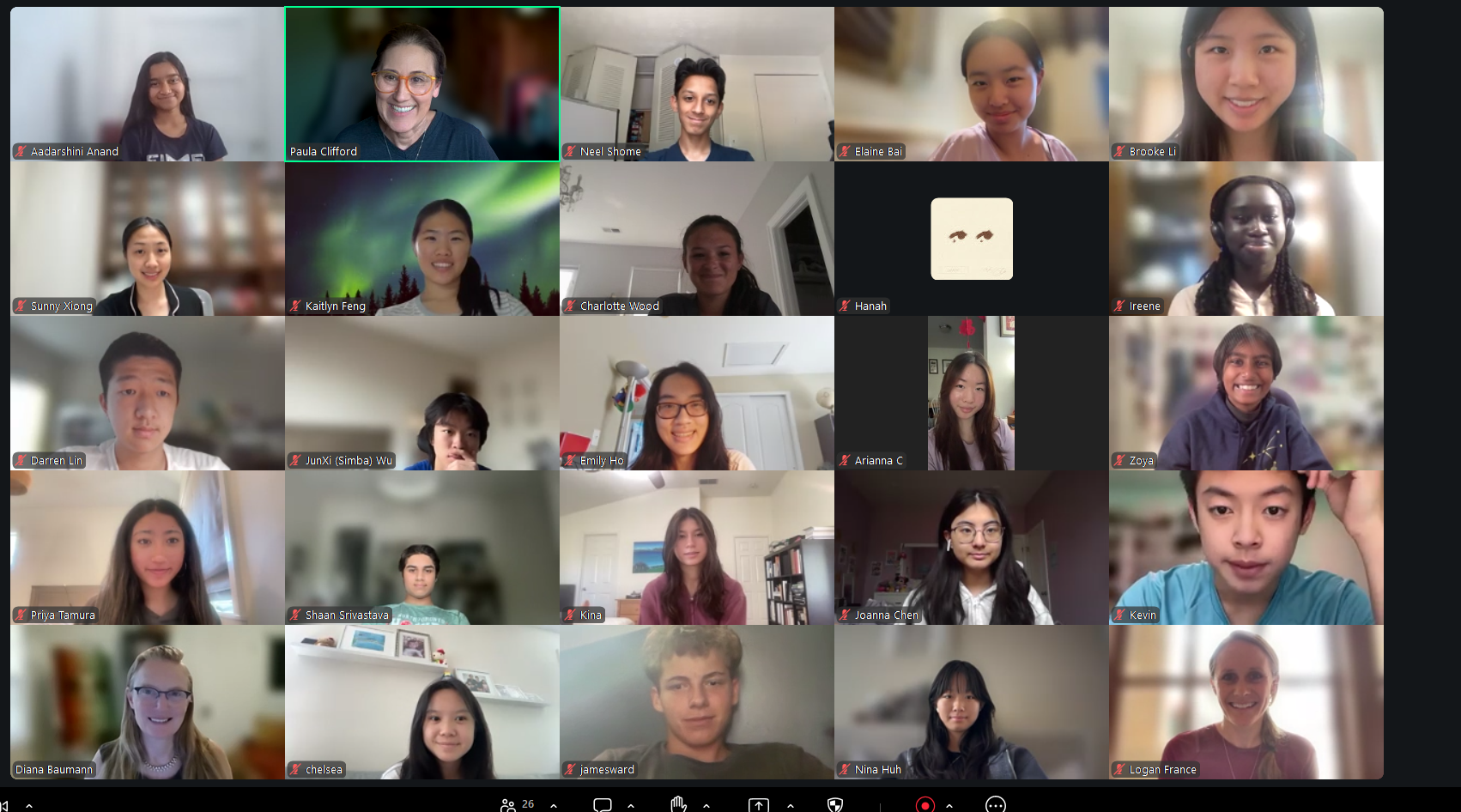
On the first day, my mom spent 10 minutes yelling, “YOU HAVE CLASS! WAKE UP!” I lazily pulled off my blanket, opened my computer, and joined the meeting, looking half-dead and half-asleep in front of the camera. When I finally became alert, the course overview was being presented, and it initially felt like old, boring school. Strangely, though, my classmates were genuinely interested in the discussion. I remained silent until we were placed into breakout rooms.
There, I realized that I was not the only person struggling with the schedule. One of my group members was attending from China from 9:00 p.m. until 4:00 a.m., which was practically bedtime according to her sleep schedule. That was when I understood how important the research program was to everyone. I had been given a special opportunity, and I could not waste it because of mere laziness.
I had been given a special opportunity, and I could not waste it because of mere laziness.
After that, I began waking up before the calls, preparing myself, and making an effort to participate. We had guest lecturers every day and fun breakout-room discussions. I learned about science communication, met students with similar interests, and actually enjoyed myself, which was something I had not expected from a “summer school.”
On the fourth day of camp, we visited nearby research facilities.
After an introductory presentation about animal research at the University of California, San Francisco, we headed to the aquatic laboratory, nicknamed “Le Petit Hôtel du Poisson,” or “the Little Fish Hotel.” The room contained numerous tanks filled with zebrafish. Plants and pebbles were placed inside the tanks to recreate parts of their natural environment. Nearby, we saw a light-sheet microscope, which allows researchers to observe thicker biological samples more clearly. Because the zebrafish are examined while alive, a peristaltic pump continuously circulates water around them. Their transparent eggs also make genetic mutations and their effects on development easier to observe.
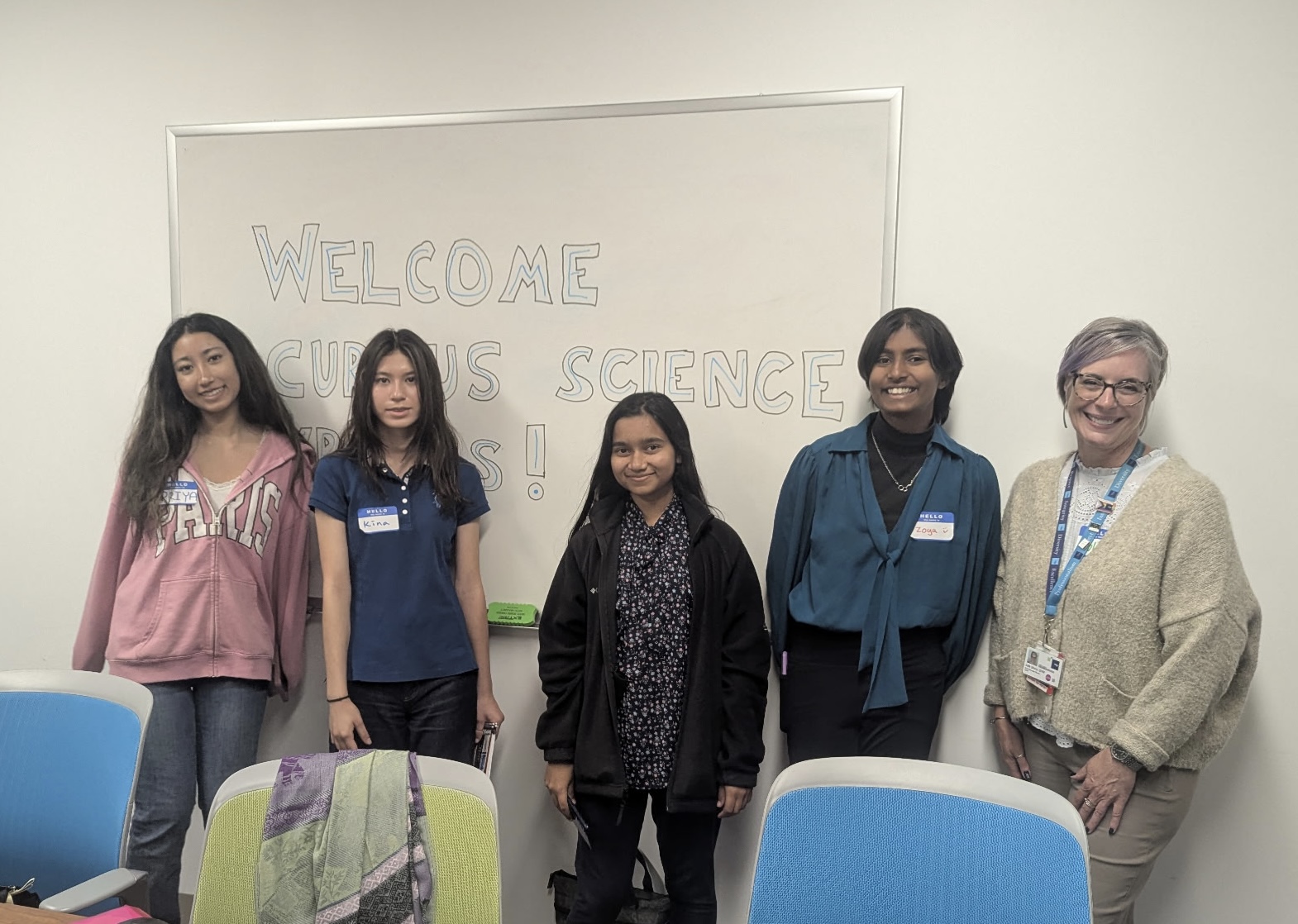
Curious Science Writers students visited labs at the University of California, San Francisco, in July. From left: Priya Tamura, Kina Sands, Aadarshini Anand, Zoya Khare, and UCSF faculty host Julie Sharp.
From there, we visited one of the most prominent subjects in laboratory research: rodents. We moved through several rooms while learning about mouse and rat husbandry, their role in research on neurodevelopmental conditions, and their behavioral differences. The rats were surprisingly calm, chubby, and lazy, while the mice constantly scampered around and tried to escape.
We also saw a six-choice maze in which milk was used as a reward for selecting the correct path. Researchers use this activity to study memory, cognitive ability, and behavioral changes caused by genetic mutations. Although the experiment had an important scientific purpose, I also found it thoroughly entertaining to imagine the rats desperately searching for their milk reward.
Finally, my favorite stop was the aquatic frog laboratory. The first species we observed was the western clawed frog, or Xenopus tropicalis. To my surprise, it had no tongue. My entire understanding of frogs had depended on their long, sticky tongues, so this discovery felt almost personally offensive.
Before I could recover from that shock, the frogs began behaving in an even stranger way. They remained perfectly still for several minutes, suddenly performed a few dramatic dance moves, and then froze again. It felt like watching an extremely serious game of Freeze Dance.
After observing the live frogs, we entered the microscope room to study embryo development. For the first time, I saw an embryo moving its body and swimming inside the egg. I stared at it in complete disbelief. Until that moment, I had never considered that an embryo could swim.
By the end of the trip, I had learned that zebrafish can reveal mutations, rats can navigate mazes, frogs can play Freeze Dance, and embryos can swim. More importantly, through this camp, I realized that science did not have to feel like old, boring school. When learning feels light, six in the morning is all right.
About the Author
Aadarshini Anand
Aadarshini Anand is a junior at American High School in Fremont, California. As a researcher and writer, she hopes to explore biopsychiatry and make complex ideas more comprehensible for the general public. Her volunteer experience with Inclusive World, an organization that supports neurodivergent individuals, inspired her to lead summer crochet workshops for neurodivergent children at InFUSE Educational Services. To fund the materials, she also organizes paid crochet workshops for neurotypical participants. Her hobbies include badminton, music, and crocheting.