cSw Speakers:
Meet Our Speakers
Communications professionals engaged in journalism, public relations, graphic art,digital media and/or education, with experience in science, health care, and/or research communications, are an essential part of training our science writers.
Interested in being speaker? Please contact us for consideration.
2025 SUMMER BOOTCAMP SPEAKERS
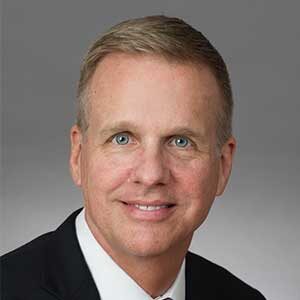
Todd Bentsen
Health and Science Communicator/Storyteller
Todd Bentsen Communications LLC
Todd Bentsen is a senior-level, mission-driven health and science communications strategist with a proven track record of helping organizations achieve high-impact goals. As president of Todd Bentsen Communications LLC, he advises clients on strategic messaging, media and public relations, web content development, and social media strategy. Prior to launching his consultancy, Todd held leadership roles across prominent scientific and academic institutions. His experience includes serving as Director of Strategic Communications Initiatives for Science at the American Psychological Association, Director of Communications Innovation and Value at the Federation of American Societies for Experimental Biology (FASEB), and Associate Vice President for Communications at Georgetown University Medical Center.
Todd holds a bachelor’s degree in communications and brings a deep commitment to advancing health and science through clear, compelling, and strategic communication.
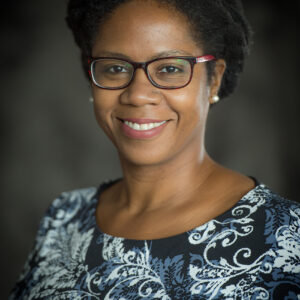
Stacy Brooks
Director of Communications and Social Media
American Physiological Society
Stacy Brooks is Director of Communications and Social Media at the American Physiological Society (APS) where she oversees content development, media relations, social media, the APS website, the award-winning I Spy Physiology blog and overall communications outreach for the nearly 9,000 member association. She is also editor-in-chief of The Physiologist Magazine, a member-focused publication which relaunched in 2019. She devotes much of her time at work helping APS members—who are primarily biomedical researchers with PhDs—learn how to better communicate their research to the media, the general public and other researchers. Prior to her time at APS, Stacy worked in the Communications Office at the American College of Obstetricians and Gynecologists and at Ogilvy Public Relations.
Stacy received her degree in Journalism, Public Relations and Advertising at Temple University in Philadelphia. She is a member of the board of Association Media and Publishing, currently serving on the Executive Committee in the role of Secretary. When not at work, you’ll find Stacy hanging out with her husband, two sons and extended family. She loves cooking, travel, flowers and a good workout—some of which she details on her blog.
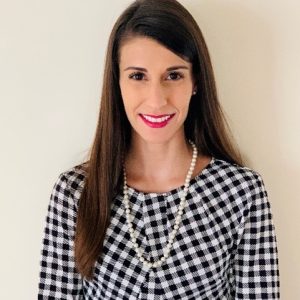
Naomi Charalambakis
Director of Communications and Science Policy
Americans for Medical Progress
Naomi Charalambakis is AMP Director of Communications and Science Policy where she plays a key role in developing and implementing proactive and reactive communication strategies for issues affecting biomedical research. She also supports the research community through translating, advising and developing messages related to policies that affect the advancement of science in the United States.
Prior to her role at AMP, Naomi was the Associate Director of Science Policy for the Federation of American Societies for Experimental Biology (FASEB), a coalition of 22 scientific societies collectively representing over 110,000 individual biological and biomedical researchers. In this role, she led efforts of FASEB’s Science Policy Committee, guiding a broad range of policy discussions and coordinating with volunteers on future policy action opportunities. This included preparing comments to federal Requests for Information and Notices of Proposed Rulemaking. Additionally, Dr. Charalambakis led the Animals in Research and Education subcommittee, where she developed policy statements, tracked congressional legislation and agency directives related to animal use in federal research, and created resources for the lab animal community. Dr. Charalambakis launched her policy career at FASEB in November 2018, after graduating with her doctorate in Anatomical Sciences and Neurobiology from the University of Louisville School of Medicine where she utilized mouse transgenics to evaluate the role of retinal input on inhibitory interneurons in the visual thalamus.

Elizabeth Doughman
Editor
Poultry Future and WATT Poultry USA
Elizabeth Doughman is currently the Editor, Poultry Future and WATT PoultryUSA, where she spends her timing writing for print and online, creating promotional editorial and is in charge of all content related to two yearly conferences. She specializes in writing content related to new technologies and consumer trends — the chicken sandwich wars, alternative proteins, sustainability, gene editing, automation and robotics and anything that’s cool and new and next.
Prior to that, she spent 14 years covering the animal research industry for ALN Magazine.
Elizabeth has a B.S. in Animal Science from the University of Kentucky and an M.A. in Journalism from Northeastern University. She loves her horse, Cherokee, and specializes in sharing weird science facts at cocktail parties.
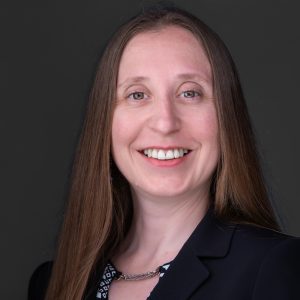
Lesley Earl
Science and Medical Writer
Lesley Earl, Ph.D., is an experienced science and medical writer. She specializes in using written and multimedia products to share basic and clinical research with scientists, clinicians, and the public.
For seven years, Lesley worked in the Office of Science Communications and Public Liaison at the National Eye Institute, part of the National Institutes of Health. While there, she created written and multimedia products to share vision health and vision research information with the public. She also led NEI’s accessibility program, ensuring that the agency’s information was available to people with vision loss and other disabilities.
Prior to that, she worked in the Biophysics Section at the National Cancer Institute, providing science writing and publications support to a group driving the development of atomic resolution electron microscopy, a technique that has transformed the biophysics field.
Lesley completed a postdoctoral fellowship at the National Institute of Dental and Craniofacial research. She earned her doctorate in cellular and molecular pathology from the University of California, Los Angeles, and her bachelor’s degree in biology from Haverford College.
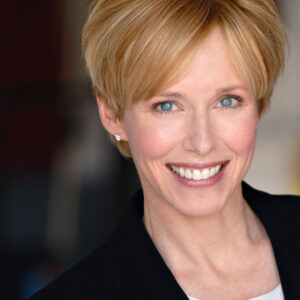
Carol Haggans
Scientific and Health Communications Consultant
National Institutes of Health
Carol Haggans is a Scientific and Health Communications Consultant with the Office of Dietary Supplements (ODS) at the National Institutes of Health. In this role, she handles a variety of health communications activities including writing and updating the ODS dietary supplement fact sheets and the consumer-focused e-newsletter, The Scoop. She also leads the ODS public inquiry program, and researches and responds to questions from consumers, health professionals, and the media about dietary supplements. In addition, Carol is a member of the NIH Nutrition Education Subcommittee, a group that reviews federally developed nutrition education materials for the public to ensure that they are consistent with the Dietary Guidelines for Americans. Before becoming a consultant, Carol was a Program Analyst with ODS from 1999 to 2004. During that time, she coordinated the development and implementation of the CARDS database of federally funded research on dietary supplements and was involved with the design and maintenance of the ODS website. Carol is a member of the American Society for Nutrition and the Academy of Nutrition and Dietetics. She received an M.S. in Nutrition from the University of Minnesota where she conducted clinical research on the effects of flaxseed consumption on estrogen metabolism and breast cancer risk in premenopausal and postmenopausal women. She is also a Registered Dietitian. Prior to becoming a nutritionist, Carol worked in the information technology field as a manufacturing and technical service engineer after receiving a B.S. in Mechanical Engineering from Rensselaer Polytechnic Institute.

Michael Newman
Senior Media Relations Representative
Johns Hopkins Medicine
Michael Newman is a seasoned science and medical communicator with 40-plus years of expertise in public affairs, journalism and broadcast media. Since 2019, he has served as senior media relations representative for five departments at Johns Hopkins Medicine.
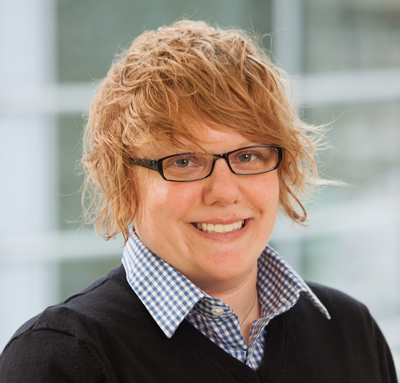
Amy Puffenberger
Strategic Communications Manager
Animal Care & Use Program, University of Michigan
Amy Puffenberger is the Strategic Communications Manager for the Animal Care & Use Program at the University of Michigan. In this role, Amy partners with key stakeholders and Program leadership to develop, implement, and maintain all strategic internal and external communication efforts in support of building and sustaining a culture of responsible research conduct at the University of Michigan. Amy holds a Bachelor of Science in Film and Video Production (2005) from Grand Valley State University and a Master of Arts Management (2010) from Carnegie Mellon University. While completing her master’s degree, Amy worked with both Pittsburgh Filmmakers and the Arts Education Collaborative, and later served as the Manager of Educational Outreach at WQED Multimedia, the PBS-affiliate in Pittsburgh, PA and the nation’s first community-supported public broadcaster.
In 2011, Amy began working as the Program Manager for the National Forum on Higher Education for the Public Good at the University of Michigan (U-M) School of Education. She joined the U-M Medical School Office of Research in 2014 as a Marketing & Communications Specialist and has managed all of the internal and external marketing and communications for the Animal Care & Use Program since 2016.
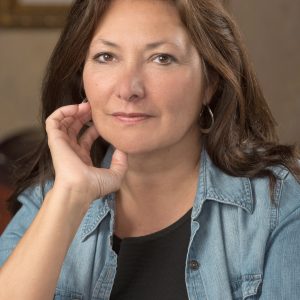
Peggy Salvatore
Science Writer
Health Business Communications
Peggy Salvatore has a BA in honors journalism from Temple University and an MBA in strategy and economics from New York Institute of Technology. As a consultant for 30 years, most of her work has been in healthcare with a focus on pharmaceuticals. Peggy’s consulting firm, Health Business Communications, engages in projects in training and development, IT, health policy, health economics and pharmacoeconomics, business strategy and long-term project work such as early developmental stage strategy with the Gates Foundation’s global vaccine initiative. Before moving into healthcare and training, Peggy worked as a full-time daily journalist covering government and politics. She has written several books on working with Subject Matter Experts.
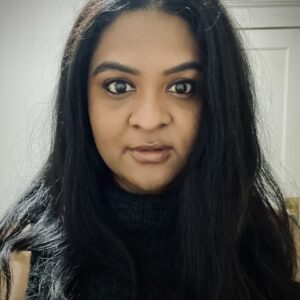
Sandhya Shekar
Researcher and Science Writer
Scientific Associate, Schepens Eye Research Institute, Harvard Medical School
Sandhya Shekar is a researcher and a science writer. She is passionately curious about all things science.
Sandhya works as Scientific Associate at Schepens Eye Research Institute, Harvard Medical School in Boston, USA. She works on NIH funded vision science research projects. Sandhya completed her masters in vision sciences from Pacific University College of Optometry in Oregon, USA and a bachelors in optometry from Bauch and Lomb School of Optometry, BITS, India. She also completed a 1-year program in Effective Writing for Health Care from Harvard Medical School.
Besides doing research, Sandhya hosts a science podcast called Nothing is Rocket Science on Youtube and writes science articles for the general audience. She also mentors girls and women in the area of science and research. When not pursuing science, she loves to read, travel, hike and paint.
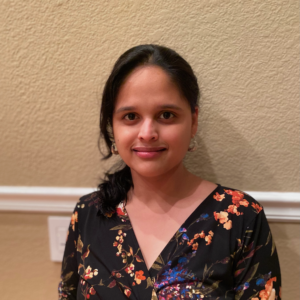
Rasika Vartak
Molecular Biologist
Rasika Vartak, Ph.D., is a molecular biologist by training who stumbled into the amazing world of neuroscience five years ago. After completing her Ph.D. at the University of Texas Health Science Center at San Antonio, she worked at Stanford University and Arizona State University, trying to dissect the pathways that cause neurodegenerative diseases such as Alzheimer’s. She has published extensively in both peer-reviewed and non-peer-reviewed journals. Throughout her career, Rasika has been extensively involved in mentoring high school and undergraduate students to learn the scientific process through hands-on experimentation and problem-solving. She strongly believes that learning how to communicate science is an integral part of being a scientist.
2023 SUMMER BOOTCAMP SPEAKERS
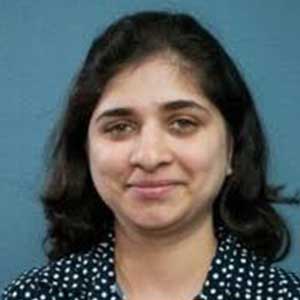
Dr. Manasi Apte
Project Manager, Science and Health
Ripple Effect Communications
Dr. Manasi Apte is a post-doctoral research fellow at the National Cancer Institute (NCI), which is a part of the National Institutes of Health (NIH). She is currently trying to understand how some cancer cells evade all the pre-existing therapies by maintaining their DNA ends using an exciting but yet unexplored, alternate pathway in yeast cells named HAATI. She received her Ph.D. from Wayne State University, Detroit, studying how fruit flies determine their sex using a non-conventional mechanism.
Prior to her Graduate work, Manasi received her B.S and M.S in Microbiology from India. She has published several research articles and has won awards and recognition for presenting her work. All throughout her academic career, Manasi has been a passionate advocate for better science communication. For the past five years at the NIH, she has served as editor-in-chief for NCI Fellows newsletter where she introduced informational interview reports as an ongoing feature.
She is also involved in various science outreach programs at the NCI working closely with students and administrators for curriculum development and execution. Manasi also works as a course instructor for ASBMB’s Art of Science Communications Online course. She strongly believes that telling your story effectively is the key for effective communication and plans to use her expertise in science as well as communications to increase science literacy in the general public.
Todd Bentsen
Director of Strategic Communications Initiatives
Science at the American Psychological Association
Todd Bentsen is the Director of Strategic Communications Initiatives for Science at the American Psychological Association. A communications leader specializing in health and science, his experience in research-oriented national organizations includes the Federation of American Societies for Experimental Biology, Georgetown University Medical Center, Society for Neuroscience, and American Society for Clinical Oncology. His skills span the communications gamut — with particular expertise in media relations — and he is passionate about conveying complex health and science information to public audiences. Bentsen holds a bachelor’s degree in communications from the University of Maryland.
Stacy Brooks
Director of Communications and Social Media
American Physiological Society
Stacy Brooks is Director of Communications and Social Media at the American Physiological Society (APS) where she oversees content development, media relations, social media, the APS website, the award-winning I Spy Physiology blog and overall communications outreach for the nearly 9,000 member association. She is also editor-in-chief of The Physiologist Magazine, a member-focused publication which relaunched in 2019. She devotes much of her time at work helping APS members—who are primarily biomedical researchers with PhDs—learn how to better communicate their research to the media, the general public and other researchers. Prior to her time at APS, Stacy worked in the Communications Office at the American College of Obstetricians and Gynecologists and at Ogilvy Public Relations.
Stacy received her degree in Journalism, Public Relations and Advertising at Temple University in Philadelphia. She is a member of the board of Association Media and Publishing, currently serving on the Executive Committee in the role of Secretary. When not at work, you’ll find Stacy hanging out with her husband, two sons and extended family. She loves cooking, travel, flowers and a good workout—some of which she details on her blog.
Elizabeth Doughman
Editor
Poultry Future and WATT Poultry USA
Elizabeth Doughman is currently the Editor, Poultry Future and WATT PoultryUSA, where she spends her timing writing for print and online, creating promotional editorial and is in charge of all content related to two yearly conferences. She specializes in writing content related to new technologies and consumer trends — the chicken sandwich wars, alternative proteins, sustainability, gene editing, automation and robotics and anything that’s cool and new and next.
Prior to that, she spent 14 years covering the animal research industry for ALN Magazine.
Elizabeth has a B.S. in Animal Science from the University of Kentucky and an M.A. in Journalism from Northeastern University. She loves her horse, Cherokee, and specializes in sharing weird science facts at cocktail parties.
Carol Haggans
Scientific and Health Communications Consultant
National Institutes of Health
Carol Haggans is a Scientific and Health Communications Consultant with the Office of Dietary Supplements (ODS) at the National Institutes of Health. In this role, she handles a variety of health communications activities including writing and updating the ODS dietary supplement fact sheets and the consumer-focused e-newsletter, The Scoop. She also leads the ODS public inquiry program, and researches and responds to questions from consumers, health professionals, and the media about dietary supplements. In addition, Carol is a member of the NIH Nutrition Education Subcommittee, a group that reviews federally developed nutrition education materials for the public to ensure that they are consistent with the Dietary Guidelines for Americans. Before becoming a consultant, Carol was a Program Analyst with ODS from 1999 to 2004. During that time, she coordinated the development and implementation of the CARDS database of federally funded research on dietary supplements and was involved with the design and maintenance of the ODS website. Carol is a member of the American Society for Nutrition and the Academy of Nutrition and Dietetics. She received an M.S. in Nutrition from the University of Minnesota where she conducted clinical research on the effects of flaxseed consumption on estrogen metabolism and breast cancer risk in premenopausal and postmenopausal women. She is also a Registered Dietitian. Prior to becoming a nutritionist, Carol worked in the information technology field as a manufacturing and technical service engineer after receiving a B.S. in Mechanical Engineering from Rensselaer Polytechnic Institute.
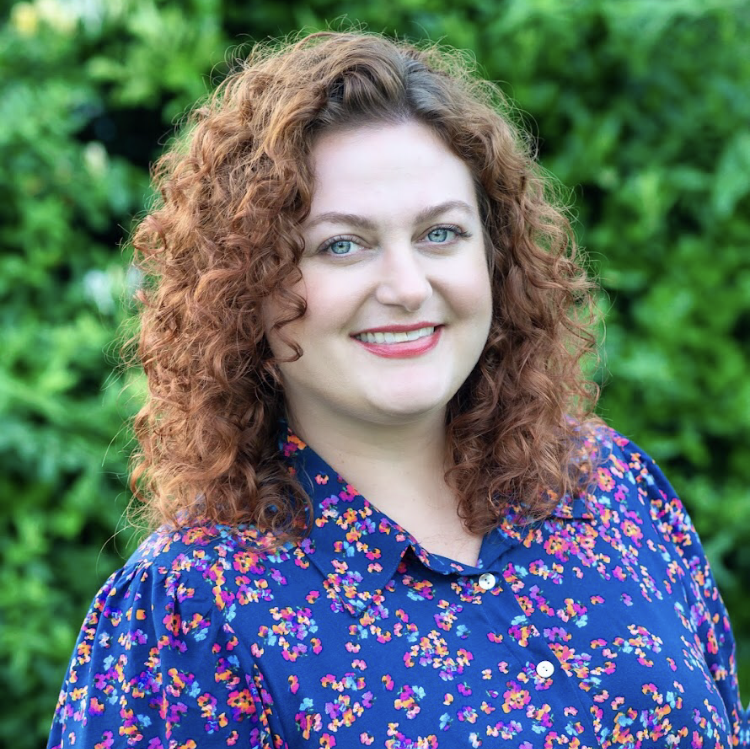
Jessica Chiantella Henry
Digital Media Specialist
National Institutes of Health
Jesica Chiantella Henry has led public health and communications projects for more than 13 years at non-profits and government agencies. She loves weaving stories with health information to engage audiences on many different platforms. Currently, she is a Digital Communications Specialist at the National Institute of Dental and Craniofacial Research at the National Institutes of Health. She received a BA in theater from University of Maryland, and MA in communications from American University with a specialization in entertainment education research. Ms. Henry also served in the United States Peace Corps in El Salvador.
Bob Kuska
Science Writer
Office of the Director, National Institutes of Health
Bob Kuska is a Science Writer in the Office of the Director at the National Institutes of Health. He is also the the author of several books including Hot Potato: How Washington and New York Gave Birth to Black Basketballand Changed America’s Game Forever.
Michael Newman
Senior Media Relations Representative
Johns Hopkins Medicine
Michael Newman is a seasoned science and medical communicator with 40-plus years of expertise in public affairs, journalism and broadcast media. Since 2019, he has served as senior media relations representative for five departments at Johns Hopkins Medicine.
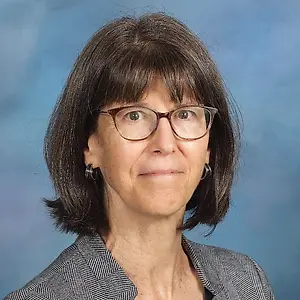
Amy Sheck
Dean of Science
North Carolina School of Science and Mathematics
Amy Sheck is the dean of Science at the NC School of Science and Mathematics, a public residential high school for gifted and talented students from across the state. As dean, she supports a talented and dedicated faculty and oversees a hands-on science program at the Durham and Morganton campuses with a thriving research program, as well as a robust set of Online science courses. In addition, she coordinates two major initiatives: for the NC Science Festival, she leads Lean In, Women in Science, a panel interview of 6 prominent female scientists and she sponsors TEDxYouthNCSSM, a community conference to showcase ideas. She led the NC Student Academy of Science for nine years. She served as Biology coordinator for several years and enjoyed teaching biology as long as her administrative responsibiities would allow. She specialized in teaching ecology, genetics (molecular, classical, and population), and scientific research and was recognized with the UNC Board of Governors Award for Excellence in Teaching. These days she teaches a seminar on Science Communication (inspired by a workshop at the Alan Alda Center for Communicating Science) and a short course on the Science of Breadmaking. She supports students entering into science competitions and generally fosters the development of young scientists.
Prior to coming to NCSSM, she conducted research in the Entomology department of North Carolina State University and taught botany and entomology at the University of Asmara, Eritrea (East Africa). Her academic training is in the area of ecological genetics and evolutionary biology, particularly the interactions between pest insects and agricultural crop plants. Her doctoral dissertation earned from NC State University explored the genetic basis of host range in Heliothis virescens (a pest caterpillar). She earned a MS in Zoology from the University of Maryland and a BS in Natural Resources from the University of Michagan. In her spare time she enjoys long-distance hiking, travel, nature and gardening and baking sourdough bread.
Rasika Vartak
Molecular Biologist
Rasika Vartak, Ph.D., is a molecular biologist by training who stumbled into the amazing world of neuroscience five years ago. After completing her Ph.D. at the University of Texas Health Science Center at San Antonio, she worked at Stanford University and Arizona State University, trying to dissect the pathways that cause neurodegenerative diseases such as Alzheimer’s. She has published extensively in both peer-reviewed and non-peer-reviewed journals. Throughout her career, Rasika has been extensively involved in mentoring high school and undergraduate students to learn the scientific process through hands-on experimentation and problem-solving. She strongly believes that learning how to communicate science is an integral part of being a scientist.
2022 SUMMER BOOTCAMP SPEAKERS
Dr. Manasi Apte
Project Manager, Science and Health
Ripple Effect Communications
Dr. Manasi Apte is a post-doctoral research fellow at the National Cancer Institute (NCI), which is a part of the National Institutes of Health (NIH). She is currently trying to understand how some cancer cells evade all the pre-existing therapies by maintaining their DNA ends using an exciting but yet unexplored, alternate pathway in yeast cells named HAATI. She received her Ph.D. from Wayne State University, Detroit, studying how fruit flies determine their sex using a non-conventional mechanism.
Prior to her Graduate work, Manasi received her B.S and M.S in Microbiology from India. She has published several research articles and has won awards and recognition for presenting her work. All throughout her academic career, Manasi has been a passionate advocate for better science communication. For the past five years at the NIH, she has served as editor-in-chief for NCI Fellows newsletter where she introduced informational interview reports as an ongoing feature.
She is also involved in various science outreach programs at the NCI working closely with students and administrators for curriculum development and execution. Manasi also works as a course instructor for ASBMB’s Art of Science Communications Online course. She strongly believes that telling your story effectively is the key for effective communication and plans to use her expertise in science as well as communications to increase science literacy in the general public.
Todd Bentsen
Director of Strategic Communications Initiatives
Science at the American Psychological Association
Todd Bentsen is the Director of Strategic Communications Initiatives for Science at the American Psychological Association. A communications leader specializing in health and science, his experience in research-oriented national organizations includes the Federation of American Societies for Experimental Biology, Georgetown University Medical Center, Society for Neuroscience, and American Society for Clinical Oncology. His skills span the communications gamut — with particular expertise in media relations — and he is passionate about conveying complex health and science information to public audiences. Bentsen holds a bachelor’s degree in communications from the University of Maryland.
Stacy Brooks
Director of Communications and Social Media
American Physiological Society
Stacy Brooks is Director of Communications and Social Media at the American Physiological Society (APS) where she oversees content development, media relations, social media, the APS website, the award-winning I Spy Physiology blog and overall communications outreach for the nearly 9,000 member association. She is also editor-in-chief of The Physiologist Magazine, a member-focused publication which relaunched in 2019. She devotes much of her time at work helping APS members—who are primarily biomedical researchers with PhDs—learn how to better communicate their research to the media, the general public and other researchers. Prior to her time at APS, Stacy worked in the Communications Office at the American College of Obstetricians and Gynecologists and at Ogilvy Public Relations.
Stacy received her degree in Journalism, Public Relations and Advertising at Temple University in Philadelphia. She is a member of the board of Association Media and Publishing, currently serving on the Executive Committee in the role of Secretary. When not at work, you’ll find Stacy hanging out with her husband, two sons and extended family. She loves cooking, travel, flowers and a good workout—some of which she details on her blog.
Elizabeth Doughman
Editor
AWATT Poultry USA and Poultry Future
For the last 13 years, Elizabeth Doughman has covered biomedical, veterinary and pharmaceutical research for ALN Magazine. She has written about everything from vivarium design to methods of improving laboratory animal welfare. Elizabeth has a B.S. in Animal Science from the University of Kentucky and an M.A. in Journalism from Northeastern University. She loves her horse, Cherokee, and specializes in sharing weird science facts at cocktail parties.
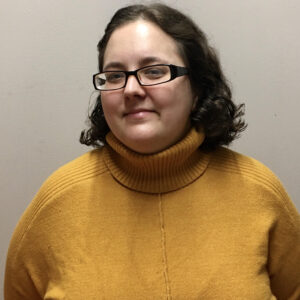
Brooke Dulka
Associate Manager, Medical Writer and Science Communicator
Cardinal Health Specialty Solutions
Brooke Dulka, Ph.D. (she/her/hers) is an associate manager, medical writer, and science communicator at Cardinal Health Speciality Solutions. Here, she leads a team of writers/scientists as they strategize on content creation for summits, prepares newsletters covering recent research, and creates slide decks and data-driven reports for case insight programs and advisory boards. She also aids her team as they prepare abstracts, posters, and research papers using real-world data. As a manager and team leader, Brooke is committed to promoting diversity in communication, mentoring junior writers, protecting data integrity, and building awareness through education.
Prior to her career in medical writing, Brooke was a postdoctoral researcher who studied the link between aging, memory, and protein degradation within the brain. Before that, while I working on her doctorate, she studied resilience to traumatic stress and taught undergraduate courses in Research Methodology and Behavioral Neuroscience. In her free time, she enjoys reading fantasy and science fiction, drinking tea, and spending time with her dog.
Carol Haggans
Scientific and Health Communications Consultant
National Institutes of Health
Carol Haggans is a Scientific and Health Communications Consultant with the Office of Dietary Supplements (ODS) at the National Institutes of Health. In this role, she handles a variety of health communications activities including writing and updating the ODS dietary supplement fact sheets and the consumer-focused e-newsletter, The Scoop. She also leads the ODS public inquiry program, and researches and responds to questions from consumers, health professionals, and the media about dietary supplements. In addition, Carol is a member of the NIH Nutrition Education Subcommittee, a group that reviews federally developed nutrition education materials for the public to ensure that they are consistent with the Dietary Guidelines for Americans. Before becoming a consultant, Carol was a Program Analyst with ODS from 1999 to 2004. During that time, she coordinated the development and implementation of the CARDS database of federally funded research on dietary supplements and was involved with the design and maintenance of the ODS website. Carol is a member of the American Society for Nutrition and the Academy of Nutrition and Dietetics. She received an M.S. in Nutrition from the University of Minnesota where she conducted clinical research on the effects of flaxseed consumption on estrogen metabolism and breast cancer risk in premenopausal and postmenopausal women. She is also a Registered Dietitian. Prior to becoming a nutritionist, Carol worked in the information technology field as a manufacturing and technical service engineer after receiving a B.S. in Mechanical Engineering from Rensselaer Polytechnic Institute.
Bob Kuska
Science Writer
Office of the Director, National Institutes of Health
Bob Kuska is a Science Writer in the Office of the Director at the National Institutes of Health. He is also the the author of several books including Hot Potato: How Washington and New York Gave Birth to Black Basketballand Changed America’s Game Forever.

Brandon Levy
Health Communications Specialist
National Institutes of Health
Brandon Levy is a Science Communications Editor for the Intramural Research Program (IRP) at the National Institutes of Health (NIH), where he works to increase the IRP’s public profile, inform the public about IRP research, and attract scientists and students to work in IRP labs. He particularly enjoys writing about the cutting-edge research performed at NIH, but he also produces videos and content for social media. Before joining the IRP, Brandon worked as a science writer in the NIH’s National Institute of Neurological Disorders and Stroke (NINDS) and as a postbaccalaureate Intramural Research Training Award (IRTA) fellow in the NIH’s National Institute of Mental Health (NIMH), spending his days putting people inside giant magnets and sending magnetic waves into their brains to shed light on the mysteries of learning and memory. He has a Master’s degree in Science Writing from the Massachusetts Institute of Technology and a B.S. degree in neuroscience from Duke University. He is also a member of the National Association of Science Writing and the D.C. Science Writers Association.
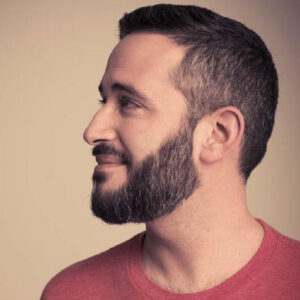
Ben Moldave
Lead Visual/UI Designer
Booz Allen Hamilton
Ben Moldave is a Creative Director with 18 years of experience across multiple industries, including Health Care, Real Estate, Video Games, Music, Hospitality, and the Federal Government. He graduated Magna Cum Laude from American University in 2004, and since then has worked at a number of creative agencies as a graphic designer, art director, creative director, and user experience/user interface lead. He has worked on and supervised the creation of websites, data visualizations, mobile apps, multi-channel consumer campaigns, photoshoots, and branding systems. His work has won multiple awards from The Art Directors Club, Hermes Creative Awards, and the Cannes Lions International Festival of Creativity. He is passionate about making complicated medical information more accessible and understandable to the public, and creating experiences and content that is deeply meaningful to users and creates a material improvement in their day-to-day lives.
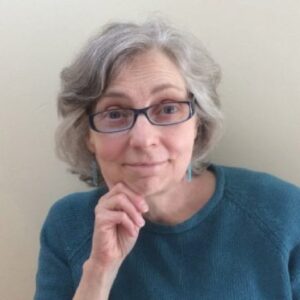
Katherine Moldave
Freelance Science and Technology Writer
Katherine (Cathy) Moldave has been a freelance science and technology writer; held several management positions at Merck AgVet and Merial Ltd.; cofounded the animal health consultancy and clinical CRO AlcheraBio LLC; and cofounded Turnstone Animal Health, a strategic communications and business-development support organization. She’s mentored Rutgers animal science grad students, served as a coach for companies presenting at the KC Animal Health Investment Forum, and is a member of the Scientific Advisory Board of the Alliance for Contraception in Cats and Dogs. She’s also involved in creating new opera. She has an undergraduate degree from Washington University in St. Louis, an MBA from Fairleigh Dickinson, and, like cSw participants, a great deal of curiosity.
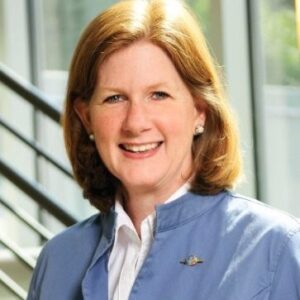
Lisa Newbern
Cheif of Public Affairs
Yerkes National Primate Research Center
Lisa Newbern is Chief, Public Affairs, for Yerkes National Primate Research Center (NPRC) at Emory University. In this role, she provides strategic counsel, develops measurable action plans and leads teams in executing communication programs that include executive messaging, issues and risk management, media relations, internal communication, community, educational and collaborative outreach, social media, online presence, government relations, special events, sponsorship opportunities, fundraising and historical archiving. She also leads the collaborative public relations initiatives for the seven NPRCs, including NPRC.org and @NPRCnews. Among her service activities, she is a board member for Americans for Medical Progress; a member of the Georgia Department of Education Division of Special Education State Advisory Panel and a mentor to students in Emory University’s Genetics Counseling Program.
Michael Newman
Senior Media Relations Representative
Johns Hopkins Medicine
Michael Newman is a seasoned science and medical communicator with 40-plus years of expertise in public affairs, journalism and broadcast media. Since 2019, he has served as senior media relations representative for five departments at Johns Hopkins Medicine.

Richard Sima
Brain Matters Columnist
Washington Post
Neuroscientist turned science writer. Covers the life and environmental sciences for outlets like The New York Times, Scientific American, Discover, and Eos. Passionate about science and sharing its stories with the public and policymakers. Ph.D. in neuroscience from Johns Hopkins University and an undergraduate degree in neurobiology from Harvard College. Skilled in writing, editing, story-sleuthing, and specific types of brain electrophysiology.
Rasika Vartak
Molecular Biologist
Rasika Vartak, Ph.D., is a molecular biologist by training who stumbled into the amazing world of neuroscience five years ago. After completing her Ph.D. at the University of Texas Health Science Center at San Antonio, she worked at Stanford University and Arizona State University, trying to dissect the pathways that cause neurodegenerative diseases such as Alzheimer’s. She has published extensively in both peer-reviewed and non-peer-reviewed journals. Throughout her career, Rasika has been extensively involved in mentoring high school and undergraduate students to learn the scientific process through hands-on experimentation and problem-solving. She strongly believes that learning how to communicate science is an integral part of being a scientist.