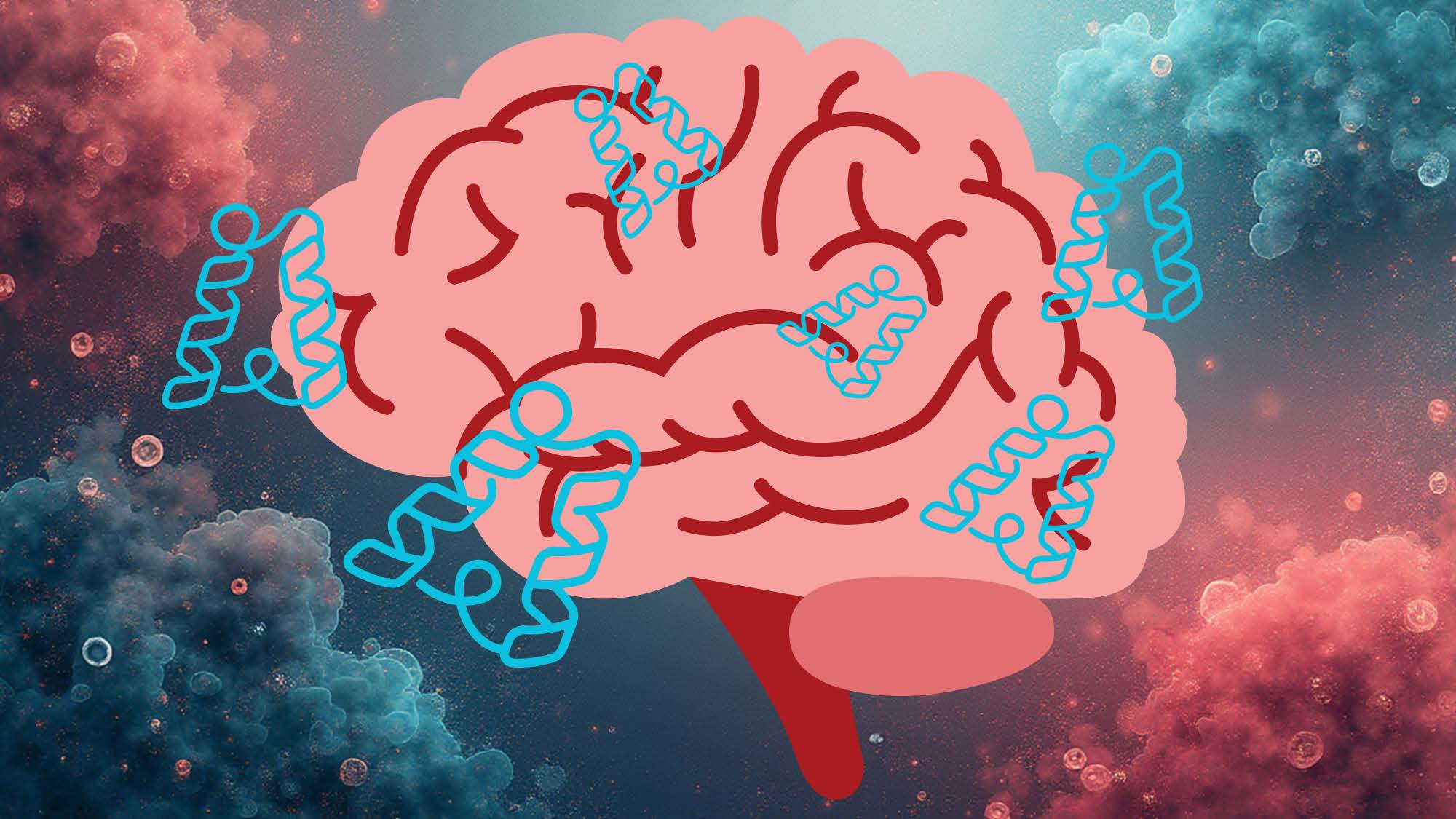
The world is teeming with biological assassins. They lurk everywhere—in secluded forests, homes, and even within your body. Some stalk silently, striking when backs are turned. Others, like viruses, infiltrate and hijack their targets. Their motive is clear: survive and reproduce. Yet, prion diseases, also known as transmissible spongiform encephalopathies (TSEs), are inexplicable and claimed over 500 lives in the United States in 2023, according to the Centers of Disease Control and Prevention.
Prions, nonliving pathogens, have baffled scientists since the 1920s, when German neurologists Alfons Jakob and Hans Creutzfeldt first described brains riddled with Swiss-cheese-like holes, alongside memory loss and personality shifts. The culprit wasn’t a parasite or virus, but a rogue protein.
Even if we don’t fully understand what makes prions tick, scientists are working to fight back using cutting-edge tools, and perhaps a little CHARM.
A look at prions
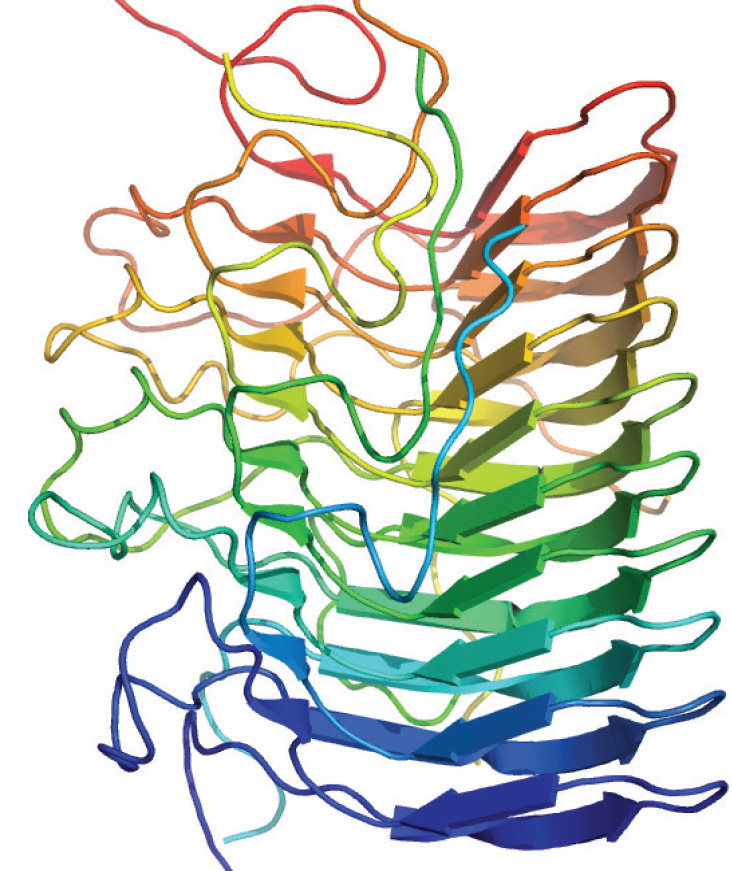
Prion diseases are as bizarre as they are deadly. They stem from a misfolded, scrambled version of a cellular prion protein (PrPc), which is found mostly in nerve cells. The danger? Once one PrPc protein misfolds, it convinces others nearby to do the same, triggering a domino effect of destruction.
Even stranger, scientists still aren’t sure what normal PrPc even does. Lab animals, like mice, missing the gene live normal lives. Yet it’s found in high levels in many cells. As Professor Neil Mabbott, a specialist in prion disease at the University of Edinburgh’s Roslin Institute, puts it, “It must be doing something.”
Mabbott studies scrapie, a prion disease in sheep and goats that doesn’t infect humans but behaves similarly to human versions. It’s a safer model for studying diseases like Creutzfeldt-Jakob disease (CJD), which causes memory loss, stiffness, vision problems, and fatigue in people.
Prions can wreak havoc in three ways: through inherited mutations (familial CJD), ingestion of contaminated meat, or chillingly, by appearing spontaneously (sporadic CJD) for reasons we don’t yet understand.
Mabbott’s work focuses on how prions spread after being eaten, like during the foodborne outbreak of variant CJD linked to infected beef primarily in the United Kingdom in the 1980s and 1990s. When contaminated meat, typically brain or spinal tissue, is consumed, prions slip through the gut using the immune system’s structures meant to monitor for pathogens. They deceive the body’s defenses, settle in immune tissues like the spleen and lymph nodes, and multiply quietly. Because they originate from a native protein, the immune system doesn’t flag them as threats.
What follows is a neuroinvasive assault. Prions infiltrate nerves near the gut and begin their climb up neural highways, mainly the spinal cord or vagus nerve, toward the brain. It’s a slow-motion relay race that can take up to five years from infection to symptoms.
Once in the brain, the pace quickens. Prions pile into sticky, insoluble masses that block brain function. The brain becomes a toxic wasteland. “You see lots of white holes,” Mabbott says of CJD brain scans. Neurons become swollen or damaged. “You can lose up to 50% of those nerves.”
From investigation to intervention
While Mabbott untangles how prions invade, others are working to stop the problem at its root. One is Edwin Neumann—a Ph.D. candidate in biological engineering at the Massachusetts Institute of Technology—who’s taking a new route: epigenetic therapy.
“I came to Boston… because I was… interested in the biotech industry… particularly gene therapy,” Neumann says. Prions became his focus later because they were the perfect target for this type of intervention.
Unlike traditional gene editing, which rewrites DNA, epigenetic therapy controls how genes are used. “It’s like a conductor,” he explains. Epigenetics decide which ones play, and when.
This approach matters because the gene that codes for PrPc, called PRNP, is in everybody’s DNA. We’re born with it.
Neumann’s lab uses a molecular tool called CHARM (Coupled Histone tail for Autoinhibition Release of Methyltransferase), which reaches the brain and silences specific genes, like PRNP, by triggering a chemical process called DNA methylation.
“[It’s] like in a wildfire… removing burnable foliage… around the fire to prevent it from spreading,” Neumann says. CHARM is like a controlled burn; it removes the proteins, so prions can’t spread.
What makes CHARM so promising is how efficient it is. “The way CHARM [works] is by leveraging the [cell’s own] machinery,” he explains. Our cells already produce gene-silencing proteins, but they don’t normally act unless all the right pieces are in place. CHARM brings those pieces together to get the job done.
With prions’ eerie ability to evade the immune system, and no existing cure, this kind of therapy might be our best shot. The idea is simple: no protein, no prion, no problem.
In Brief:
- Prion diseases attack the nervous system.
- Mutations in a gene that everyone has can cause normal prion proteins to misfold into abnormal infectious shapes.
- CHARM, an epigenetic therapy that controls how genes are used can be used to silence the prion gene in brain cells.
Sources
Sources:
Image of “Structure of amyloid-forming prion protein.” National Institute of General Medical Sciences – Image and Video Gallery. Creative Commons Attribution Non-Commercial ShareAlike 3.0 License. Image originally appeared in a December 2012 PLOS Biology paper. Source: Douglas Fowler, U. of Washington.
Imran, M., & Mahmood, S. (2011). An overview of human prion diseases. Virol J, 8:559. https://doi.org/10.1186/1743-422x-8-559
Mabbott, Neil. Interview conducted by Alexis Kim. August 16, 2024.
Mabbott, N. A., Bradford, B. M., Pal, R., Young, R., & Donaldson, D. S. (2020). The Effects of Immune System Modulation on Prion Disease Susceptibility and Pathogenesis. Int J Mol Sci, 21(19): 7299. https://doi.org/10.3390/ijms21197299
Mabbott, N. A., & MacPherson, G. G. (2006). Prions and their lethal journey to the brain. Nat Rev Microbiol, 4, 201–211. https://doi.org/10.1038/nrmicro1346
Nafe, R., Arendt, C. T., & Hattingen, E. (2023). Human prion diseases and the prion protein—what is the current state of knowledge? Transl Neurosci, 14(1): 20220315. https://doi.org/10.1515/tnsci-2022-0315
Neumann, Edwin. Interview conducted by Alexis Kim. August 23, 2024.
Neumann, E. N., et al. (2024). Brainwide silencing of prion protein by AAV-mediated delivery of an engineered compact epigenetic editor. Science, 384(6703). https://doi.org/10.1126/science.ado7082
Hall W. A., & Masood W. (2025). Creutzfeldt-Jakob Disease. In: StatPearls. Treasure Island (FL): StatPearls Publishing. https://www.ncbi.nlm.nih.gov/books/NBK507860/
Editorial Team
- Chief Editor: Katherine Mi
- Associate Editor: Christine Chen
- Team Editor: Chloe Eng
- Graphic Designer: cSw Staff
- Social Media Manager: Chloe Eng
- Social Media Coordinators: Ellen Bu and Alexis Kim
Mentor
- Bushraa Khatib is a former science writer-editor at the National Institute of Dental and Craniofacial Research at the National Institutes of Health.
Content Experts
Neil A. Mabbott is the Professor of Immunopathology, Head of the Immunology Division, and Director of Teaching at the Roslin Institute & Royal (Dick) School of Veterinary Studies, at the University of Edinburgh. He specializes in host-pathogen interactions in the mucosal immune system and aims to understand the pathogenesis of infectious diseases within the immune system. He has published papers on prions, salmonella, and similar gastrointestinal pathogens.
Edwin N. Neumann is a Ph.D. candidate in the Jonathan Weissman lab at the Whitehead Institute at the Massachusetts Institute of Technology. His interests lie in the biotech industry and pharmaceutical development, which led him to epigenetic therapy and epigenetics. He had experience with CRISPR editing of genes before his research into CHARMs.